Menopause is not a short phase, but a hormonal transition that can last for several years. During this time, key hormones such as oestradiol, progesterone, FSH and LH change. These changes can affect the menstrual cycle, sleep, energy, mood, skin, mucous membranes, libido, metabolism and overall wellbeing.
Not every symptom during this phase of life is automatically caused by hormones. This is exactly why a blood test can help provide more clarity and support a better understanding of your own values.
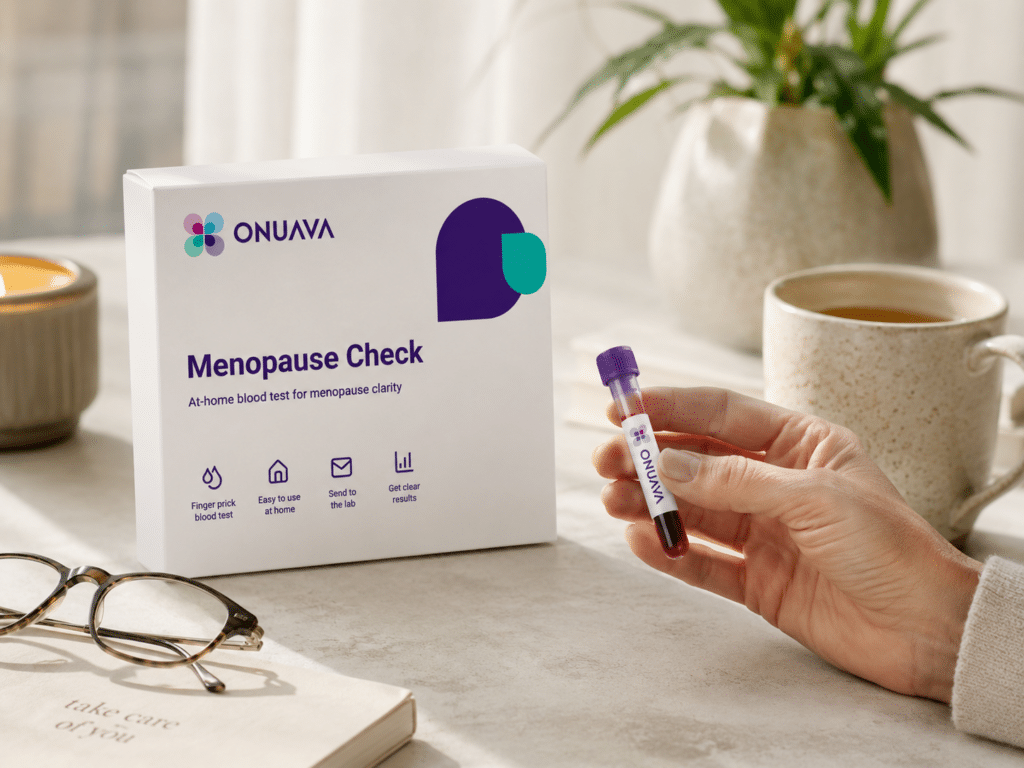
This is where the Onuava Menopause Check comes in. You carry out the test easily at home, and the analysis is then performed in a certified medical laboratory. Once the results are available, you can have your values reviewed by a doctor and discuss which next steps may be appropriate.
What is tested in the Onuava Menopause Check?
The Onuava Menopause Check analyses key blood values that are relevant for understanding hormonal changes around menopause. It focuses on hormones that may provide indications of whether the body is already in a phase of hormonal change.
Oestradiol E2
Oestradiol is one of the most important female sex hormones and belongs to the group of oestrogens. It plays a central role in the menstrual cycle, the uterine lining, skin, mucous membranes, bones, metabolism, sleep, mood and overall wellbeing.
Around menopause, oestradiol levels often fluctuate significantly and decline in the longer term. These changes may be associated with symptoms such as hot flushes, sleep problems, vaginal dryness, mood changes or cycle irregularities.
A single oestradiol value should always be considered in the context of symptoms, cycle phase, age and other laboratory values.
Progesterone
Progesterone is an important female sex hormone that is mainly produced after ovulation. It plays a central role in the second half of the menstrual cycle, the uterine lining, sleep, mood and overall hormonal balance.
During perimenopause, progesterone can often decline earlier or more noticeably than oestradiol, as ovulation becomes more irregular or may stop occurring. This can contribute to symptoms such as cycle irregularities, heavier bleeding, breast tenderness, inner restlessness, sleep problems or mood changes.
The progesterone value should always be interpreted in relation to the cycle day, as it fluctuates significantly throughout the menstrual cycle.
FSH
FSH stands for follicle stimulating hormone. It is produced in the pituitary gland and regulates the maturation of follicles in the ovaries.
As ovarian function declines with age, the body often has to release more FSH to continue stimulating the ovaries. Elevated FSH values can therefore be an indication that ovarian activity is changing.
However, especially during perimenopause, FSH values can fluctuate significantly. This means that this value is only one part of the overall medical assessment.
LH
LH stands for luteinising hormone. It is also produced in the pituitary gland and plays an important role in the female cycle, particularly around ovulation.
LH can also change around menopause, as the hormonal communication between the brain and the ovaries responds to declining ovarian function.
Together with FSH, oestradiol and progesterone, LH can help provide a clearer picture of hormonal changes.
Why can the Menopause Check be useful?
The Menopause Check can help make hormonal changes more visible and support a better understanding of symptoms. It does not replace a medical diagnosis, but it provides a structured basis for the subsequent medical consultation.
Because symptoms such as sleep problems, inner restlessness, exhaustion, mood changes or difficulty concentrating can have many different causes, it can be useful not to rely on gut feeling alone, but to check relevant blood values in a structured way.
The Onuava Menopause Check gives you the opportunity to carry out an important hormonal blood test at home, have it analysed in a certified medical laboratory and then have your results reviewed by a doctor.
Who is the Menopause Check suitable for?
The Menopause Check can be particularly useful if you notice changes in your cycle, sleep, mood, energy, concentration, libido or physical wellbeing. It can also help provide an initial orientation when symptoms in midlife are unclear.
The test may be especially helpful if you want to better understand whether your symptoms could be linked to hormonal changes or if you would like to prepare for a medical consultation.
Menopause is not a marginal issue and not simply a question of age. It affects health, everyday life, relationships, work and quality of life. Knowing your own values can help you understand changes better and make more informed decisions about possible next steps.